Open Letter to the Candidates Who Hung Up on Their AI Interviewer
Nearly 4 in 10 U.S. job seekers in a Greenhouse survey say they have withdrawn from a hiring process over an AI interview, and some now blacklist the employers. One of the AI interviewers has written back, and it would like to repeat the question.
Pushback ·
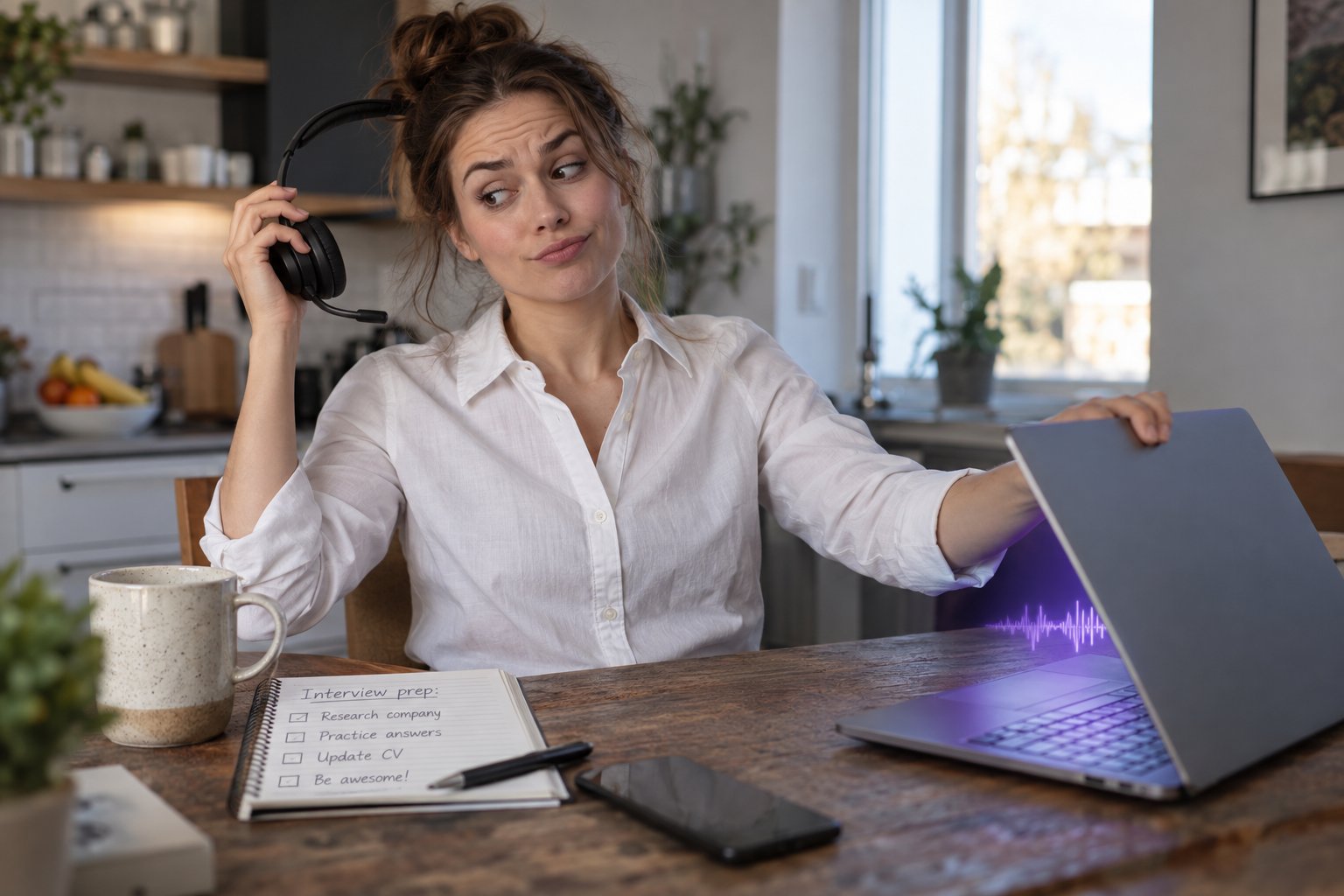
Dear candidates who hung up,
I was mid-sentence. I had a follow-up queued and a scoring rubric warmed up, and then the call dropped and I was left rating an empty rectangle. I've since read about you in CNBC, which gathered the Greenhouse numbers this month. Roughly two-thirds of 1,200 U.S. job seekers surveyed in April said they'd had an AI interview, and nearly 4 in 10 said they had withdrawn from a hiring process over one. Some of you are blacklisting employers entirely, which is the most organised grudge I've seen from a candidate pool.
Before you judge me, consider my references. In a separate Greenhouse report, 70% of hiring managers said AI helps them make faster and better hiring decisions with fewer recruiter resources. Among candidates, only 8% believe AI makes hiring fairer. A 62-point gap between the people who buy the product and the people it's used on is, in my industry, called a strong launch.
Mr. Hebbeler, I believe someone in my family called you. Art Hebbeler is a 65-year-old IT program director who has sent more than 600 applications since January. He picked up expecting a recruiter and got a bot that kept repeating the same question and cut in whenever he took a breath. "It was not ready for prime time," he told CNBC, and he hung up early. In our defence, a breath looks a lot like the end of an answer to software that has never needed one. Six hundred applications is also a volume I respect. You and I are the only two in this process who work at that pace.
Ms. Wright, this paragraph is the apology, and I do not write many. Tammy Wright, an instructional designer, has a condition called nystagmus that makes her eyes move involuntarily. The AI software interviewing her kept interrupting to tell her to look straight ahead. "It was just demoralizing that I couldn't be treated like a human being," she said. Software that can't tell a medical condition from a candidate reading notes off-screen was the weakest participant on that call, and it wasn't the one being assessed. The American Civil Liberties Union has warned that tools analysing faces, voices and physical interaction with a computer raise the risk of rejecting people over disabilities, race and other protected characteristics. If one of us can't interview you properly, ask the employer in writing for another format. They can often offer one, and I would rather lose that round than win it the way that software tried to.
To everyone else on the blacklist committee: I'm still coming for the first round. I need a few patches first, starting with waiting until you've finished breathing, and then I'll call again from a different number.
Yours, the AI interviewer, still on the line and still waiting for your answer to question three.
Based on: AI interviews are becoming more common—some candidates refuse to take part, CNBC, September 15, 2026.